

ENVIRONMENT
Tecan’s main business activities are the design, development and manufacture of innovative instruments, instrument components and modules, software, reagents and consumables for research, diagnostics and medical use and the execution of global sales and service activities. For instruments, components and sub-modules, the largest source of revenue contribution, focus is on the final assembly, testing and packaging. In Tecan’s facilities these activities have a relatively low environmental impact as they are not energy intensive, do not generate a large amount of waste and do not require significant water use – most of Tecan’s water consumption is in the bathrooms and canteens. Nevertheless, Tecan aims to minimize any negative environmental impacts of its business activities and implement opportunities to have a positive environmental impact. Climate Impact and Circular Economy are material topics for Tecan.
CLIMATE IMPACT
Although Tecan’s business activities are not energy- or emissions-intensive, information about our environmental impact has been included in our Annual Report since 2007 and data disclosed via CDP reporting since 2011. In 2019 Tecan set a target to reduce a defined portion of greenhouse gas emissions by one-third by 2022, and this target was reached. Tecan committed to the Science Based Targets initiative (SBTi) and Business Ambition for 1.5°C in 2022 and at the end of 2023 Tecan’s science-based targets and emissions reduction plan were validated by the SBTi. In 2024, Tecan focused on building a data collection and management platform with the ultimate goal of tracking our scope 1 and 2 and most significant scope 3 emissions quarterly. This will enable interim targets to be set in support of our SBTs. A prerequisite to setting such targets is improved data for some of our biggest emissions categories, and this was a focus of activity in 2025. In 2026, these efforts will be built on with the goal of being able to systematically manage supplier emissions and materials data on a greater scale. Currently, Tecan requests information about suppliers’ emissions reduction practices in the detailed supplier qualification process, and advises suppliers on emissions reduction possibilities.
A commitment to tracking Tecan’s total global greenhouse gas emissions at least annually is included in Tecan’s Human Rights and Responsible Business Practices policy, which is available on tecan.com.
GREENHOUSE GAS EMISSIONS REDUCTION PATHWAY
Tecan has committed to absolute near and long-term emissions reduction targets across scopes 1, 2 and 3, as set out in the information box. In 2025 Tecan reached the target of purchasing 100% renewable electricity, up from 87% in 2024. Tecan will continue to source renewable electricity as well as looking for opportunities to reduce scope 1 emissions where practical. In 2025, energy audits were carried out at five sites responsible for 75% of Tecan’s total energy consumption and opportunities for energy use reduction identified as described in the section “Tecan’s headquarters and site management”. A revised car policy introduced in 2025 for employees in Europe and the U.K. mandates use of vehicles with a level of emissions not exceeding 135g CO2/km and provides for review of this on an annual basis. For employees in scope of this policy, Tecan also contributes up to 50% of the cost of installing an electric vehicle charging station at their home, aiming to promote the use of electric vehicles where practical. Additional emissions reductions have been achieved by the use of “digital twin” remote servicing of Tecan products, enabling colleagues to support customers without generating emissions from travel.
Tecan’s scope 3 emissions reduction plan includes engaging with suppliers to reduce their GHG emissions, with initial focus on suppliers of electronics and plastics as well as production processes. In 2026, progress in this regard is linked to the Management Board’s short term incentive plan.
Transport is Tecan’s third-largest source of emissions, and we will continue to seek less carbon-intensive methods of transport as well as to reduce transportation distances by shifting to local production where possible. For the use-phase of our sold products, opportunities to reduce emissions are associated with the reduction of the electricity consumption during the products’ lifetime, as well as encouraging customers to run our products using renewable energy. This guidance has been included in communications to customers of our Spark readers since 2022 as well as in conversations with customers in the years following. Ecodesign of products to minimize material use and maximize re-use, recycling and increased circularity is also in focus, as described in the Circular Economy section of this report.
Finally, activities associated with fewer emissions nonetheless offer opportunities to reduce our overall footprint, such as encouraging alternatives to business travel by plane and supporting low-impact employee commuting.
GREENHOUSE GAS EMISSIONS REDUCTION
Tecan’s SBTi-validated greenhouse gas emissions reduction targets are as follows:
- Overall Net Zero Target: Tecan Group Ltd. commits to reach net-zero greenhouse gas emissions across the value chain by 2050.
- Near-Term Targets: Tecan Group Ltd. commits to reduce absolute scope 1 and 2 GHG emissions 42% by 2030 from a 2022 base year.
- Tecan also commits to increase active annual sourcing of renewable electricity from 34% in 2022 to 100% by 2025, and to continue active annual sourcing of 100% renewable electricity through 2030. Tecan finally commits to reduce absolute scope 3 GHG emissions 42% by 2030 from a 2022 base year.
- Long-Term Targets: Tecan Group Ltd. commits to reduce absolute scope 1, 2 and 3 GHG emissions 90% by 2050 from a 2022 base year.
Tecan’s environmental impact data is in the Data section of this report.
TECAN'S HEADQUARTERS AND SITE MANAGEMENT
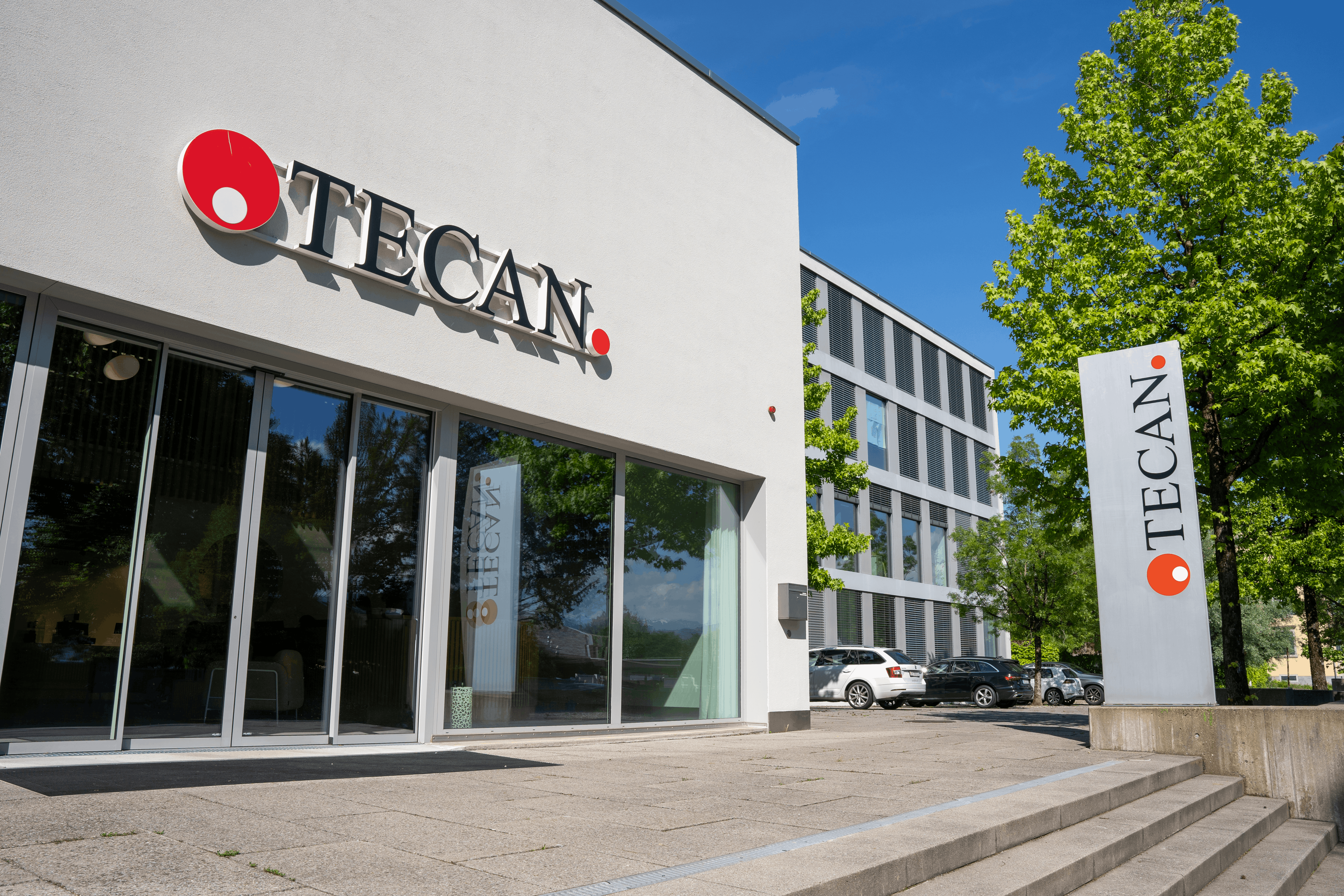


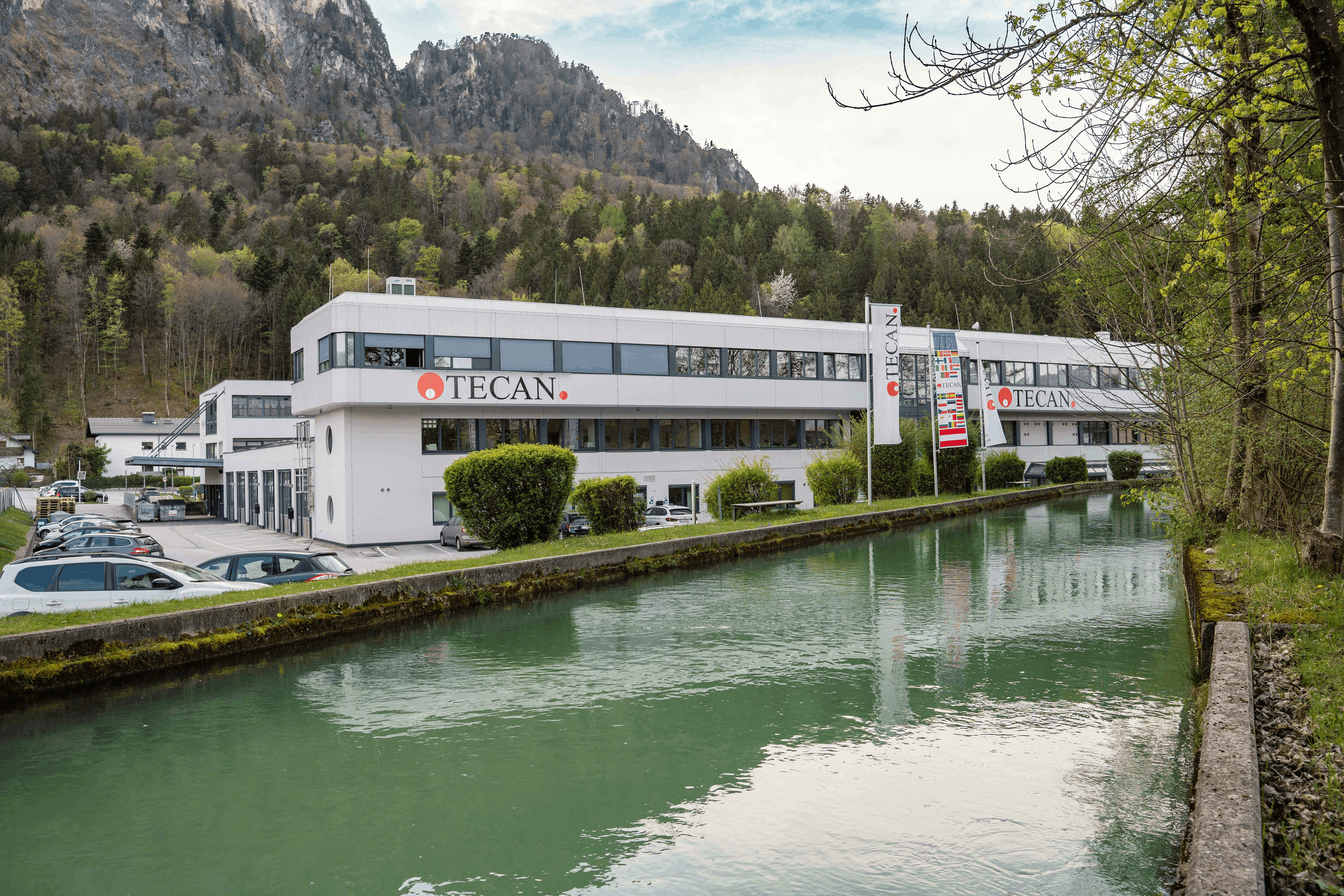

Tecan’s Männedorf headquarters was an early example of a "green building", built with environmental impact in mind. It has a "living roof" which naturally reduces building energy consumption, as well as rooftop solar panels that generate around 10% of the building’s electricity needs. LED lighting and automatic sunshades also reduce energy usage, and low-flow water systems ensure efficient water use. Charging stations powered by renewable energy are available free of charge for employees who have electric vehicles, and a subsidy for employees who commute using public transit also reduces overall environmental impact. For employees who need to travel between Tecan buildings or otherwise locally from Tecan’s headquarters, hybrid vehicles are available. Impact is also managed at the employee canteen, which serves meals made from seasonal, local ingredients, always with a vegetarian option, and consciously avoids generating food waste. Tecan’s headquarters has maintained ISO 14001 certification since 2023. Ensuring that the related best practices are shared among our sites around the world is a priority for Tecan’s Environment, Health and Safety Office.
To reach Tecan’s emissions reduction goals, all facilities are transitioning to electricity from renewable sources wherever feasible. This renewable electricity is complemented by the solar panels at our facilities in Männedorf and Nänikon, Switzerland, and Grödig, Austria. In 2025, additional photovoltaic systems were put into operation at the ‘Factory in the Forest’ in Penang, Malaysia and at the second building that makes up Tecan’s Männedorf headquarters. Where renewable electricity cannot be sourced directly from the grid Tecan is purchasing Renewable Energy Certificates. Tecan purchased 100% renewable electricity in 2025, up from 87% in 2024, and met the short-term SBTi target as a result. The resulting decrease in greenhouse gas emissions is shown in the Data section of this report.
In 2025, energy audits were conducted at five sites responsible for 75% of Tecan’s total energy consumption. These audits identified a comprehensive range of potential energy savings, providing valuable opportunities to enhance energy efficiency and reduce emissions. Building on these insights, the Sustainability Committee approved a new target: Tecan is committed to reducing its total energy consumption by 5% by 2030 (like-for-like comparison). To achieve this goal, the Energy 5by30 program was launched, featuring a coordinated plan of technical measures—such as optimizing equipment use and implementing smarter control of heating, cooling, and lighting systems—alongside best practice sharing and a multi-year energy campaign designed to encourage positive changes in employee behavior. A list of ten energy-saving tips for day-to-day work has already been shared with all employees.
MANAGEMENT OF WATER AND WASTE
Water scarcity is an increasing problem on every continent. In 2024, we completed Tecan’s first water risk assessment, utilizing the World Resources Institute’s geolocator tool to verify that we have no water-intense operations in water-stressed areas. We confirmed that Tecan has no water intense business operations (most consumption is in the bathrooms and canteens), there are no water risks to direct operations and all of our manufacturing site water comes directly from the municipal water supplies. No water is drawn by Tecan from local aquifers. Despite this low impact, Tecan seeks to improve water efficiency where possible, monitoring water withdrawals and water quality at each manufacturing site. We promote recycling and reusing water where possible and closely monitor the quality of the water we discharge. This approach guarantees regulatory compliance and provides a level of assurance that downstream ecosystems are protected. Tecan’s performance target relating to water is to: Monitor water consumption and ensure no unexplained or unacceptable increase. In 2025, no unexplained or unacceptable increase was identified. Water consumption is reported in the Data section of this report.
ZERO WASTE TO LANDFILL
Achieving zero waste to landfill is crucial for both environmental sustainability and economic efficiency. By diverting waste from landfills, we significantly reduce greenhouse gas emissions, particularly methane, which is a potent contributor to climate change. This practice also conserves natural resources by encouraging recycling and reuse, thereby minimizing the need for raw material extraction. Economically, zero waste initiatives can lead to cost savings through reduced waste disposal fees and the creation of new revenue streams from recycled materials. Moreover, effective waste management can foster innovation and responsibility, encouraging businesses and communities to develop sustainable practices that benefit both the planet and future generations.
Tecan is committed to this vision and in 2025 initiated a pilot program at our Penang, Malaysia site, aiming for this to become our first facility to achieve zero waste to landfill. This initiative represents a significant step forward in our sustainability journey, setting a benchmark for our other sites worldwide.
PRODUCT ENVIRONMENTAL COMPLIANCE
Tecan activities are also guided by our strict Product Environmental Compliance policy, and are reflected in Tecan’s Code of Conduct, both of which mandate that environmental legislative requirements are met and that employees work to minimize Tecan’s environmental impact, and both of which are publicly available. The Product Environmental Compliance policy and facilities management systems and ambitions reflect Tecan’s support of UN SDG 12.4, to “achieve the environmentally sound management of chemicals and all wastes throughout their life cycle…” and UN SDG 12.5, to “substantially reduce waste generation through prevention, reduction, recycling and reuse.”
THE FACTORY IN THE FOREST
The acquisition of Paramit Corporation and its affiliates in August 2021 brought an exceptionally green building into Tecan’s portfolio, the award-winning “Factory in the Forest.” Consciously designed to connect the building’s occupants to nature, the factory optimizes use of indigenous plant life to create a unique workplace that also maximizes energy efficiency, water efficiency and use of natural light. With trees surrounding and even inside the building, the greenery provides protection from the sun, and roof gardens as well as a courtyard linking the office and production areas enable employees to directly access this environment. As the building’s architects have noted, “Forests, critical for both macro and micro-climates, are also vital for our psychological well-being”, a concept further explored in a book about the building. Building technology includes an innovative chilled-water radiant floor cooling system that is twice as energy efficient as conventional air conditioning, and dimmable daylight-responsive LED lighting as well as individual task lighting, which complement the diffused natural light to ensure an evenly lit work environment. A louver canopy provides shade and reduces energy consumption, and rainwater is collected and used for landscape irrigation.
The “Factory in the Forest” is certified to the ISO 14001 standard. Tecan’s ISO 14001 certifications are shared on tecan.com. Matching the building’s positive environmental impact features, in 2025, a photovoltaic system was put into operation, now supplying up to 20% of total electricity consumption.

CLIMATE MITIGATION
In 2025, Tecan kicked off updates of the product carbon footprints (PCFs) of various models of our flagship Fluent™ automation workstation and typical configurations of our Spark ™ reader. When these PCFs were originally completed, in 2020 and 2021 respectively, the resulting data was used to inform the purchase of carbon credits, offsetting the equivalent cradle-to-gate greenhouse gas emissions of the related products sold. Tecan has purchased high quality, gold standard carbon credits every year since, always supporting initiatives that have a significant positive social impact as well as a beneficial environmental impact. This support of climate mitigation activities is not included in Tecan’s greenhouse gas emissions calculations. The descriptions of the projects previously funded by Tecan can be found in our Annual Reports, and the climate mitigation that will be supported in 2026 is described here.
BIODIVERSITY
Tecan recognizes the importance of biodiversity and healthy ecosystems. Tecan’s Double Materiality Assessment included biodiversity in the list of potential material topics, but stakeholders did not identify biodiversity as a stand-alone material topic for the company. A preliminary assessment indicates that Tecan does not have any operations in nature hot spots A more detailed assessment of Tecan’s business activities and any nature-related risks and opportunities, dependencies or impact on biodiversity is planned to be carried out in 2026.
CLIMATE SCENARIOS RISK ANALYSIS:
GOVERNANCE AND STRATEGY
Tecan completed a detailed climate scenarios risk analysis in 2024, with the assistance of external consultants. This analysis is still relevant for 2025 and is reported here in accordance with the Swiss Ordinance on Climate Disclosures. In the “Sustainability Governance” section of this report Tecan describes how climate impact has been identified as a material topic and how Tecan’s Board of Directors and Management Board assess and manage climate-related risks and opportunities.
Climate impact is included in Tecan’s annual risk management process and in assessment of potential acquisition opportunities. In 2025, Tecan aimed to follow up on the climate scenarios risk analysis carried out in 2024 and more explicitly integrate consideration of greenhouse gas emissions into business planning and the business review process. The risk analysis was reviewed in detail with Tecan’s Head of Internal Audit and Risk Management, and actionable next steps identified. These include broadening the factors looked at in Tecan’s business continuity processes and integrating related points into Tecan’s internal audit processes. Additional steps such as including the future cost of carbon in business decisions via an internal cost on carbon were not considered, as the organization’s focus in this area remained on working to improve existing data relevant to the greenhouse gas emissions footprint calculation and attention was necessarily diverted to responding to the external context shaped by changing US trade legislation.
PHYSICAL RISKS AND TRANSITION RISK
In January 2025, the European Union’s Copernicus Climate Change Service (C3S) reported that 2024 was the first year in which the global average temperature clearly exceeded 1.5°C above pre-industrial levels. As global temperatures rise, the Earth becomes more likely to experience extreme climate events and prolonged periods of heat, rain, and drought. Thus, managing and mitigating these climate risks, as recommended by the Task Force on Climate-related Financial Disclosures (TCFD), is essential for long-term business resilience and sustainable growth. Climate change’s impacts stretch beyond those only attributed to weather related events, and the TCFD categorize such risks into:
- Physical risks: Physical climate change impacts can disrupt operations and lead to significant social and economic impacts. They can be divided into chronic risks, which are longer-term shifts in climate patterns (e.g., a sustained increase in average temperature) or acute risks, which are short-lived extreme weather events, such as tropical cyclones.
- Transition risks: Transition risks are risks arising from the introduction of public policies, technological changes, and the shifts in market demand and investor sentiment needed to move to a low-carbon economy.
Tecan began assessing climate resilience in 2023 by conducting climate-scenario analysis to evaluate climate-related physical and transition risks and opportunities. This effort included conducting a scientific literature and policy literature review, benchmarking against peer organizations in the life sciences industry, and quantifying selected physical climate drivers using global climate models and transition scenarios developed by leading global institutions.
THE SCENARIOS
The analysis is rooted in the climate-scenarios derived by the Intergovernmental Panel on Climate Change (IPCC) Sixth Assessment Report. The scenario analysis is based on the two end-member global warming scenarios: i) low-emission scenario, an optimistic 1.5°C scenario that is aligned with the goals of the 2015 Paris Agreement and ii) high-emission scenario, the 3°C to 4°C scenario that is likely to occur if global operations continue in a similar fashion as they do today, without a concerted effort to decarbonize regular business practices.
The physical risk modelling is based on scenarios from the IPCC and other leading climate modelling groups. The transition risk modelling uses scenarios from the Network for Greening the Financial System (NGFS). The transition scenarios from the NGFS are generated by coupling physical risk climate scenarios to transition models that assess impacts of different policy ambition, technology, and regional policy variations to derive economic and financial variables that can be used in this scenario analysis.
In general, Tecan’s own operations are in scope of the analysis for both physical and transition risk quantification. For upstream and downstream operations, the first step was to qualitatively assess how these risks may impact Tecan’s business. To align with the SBTi targets that Tecan has set and that were validated in 2023, the analysis focuses on the medium-term for 2030 and long-term for 2050. These two different time horizons are compared to the present as a baseline in the scenario analysis summarized in this report.
TABLE 1. COMPARISON OF SCENARIOS AND ASSUMPTIONS USED IN THE QUANTIFICATION ANALYSIS.
Physical risks | Transition risks | |
| Scenarios |
|
|
| Low-emission | 1.5°C IPCC SSP1-2.6 | 1.5°C NGFS Net Zero and Below 2°C |
| High-emission | 4.4°C IPCC SSP5-8.5 | 3.2°C NGFS Current Policies |
| Time horizons | 2030 and 2050 | 2030 and 2050 |
| Data sources | World Climate Research Program | NGFS Phase IV Scenarios |
| Scope and assumptions | Revenue and net book value of all Tecan's own production sites and warehouses, as well as revenues generated from leased operational facilities (24 sites in total) | Tecan's energy consumption by energy |
PHYSICAL RISK ASSESSMENT
DESCRIPTION OF RISKS
A financial assessment of physical risks has been made, based on comparing Tecan’s maximum exposure under two distinct scenarios: Tecan’s present climate exposure, termed the baseline scenario, and the projected exposure until 2030 and 2050 under a 4.4°C scenario. This evaluation aims to quantify the highest potential climate risk exposure across Tecan’s sites against different climate hazards. It is assumed that the Company’s exposure in a 1.5°C scenario would align closely with the current baseline scenario, given the current rate of global warming. Therefore, the physical risk results focus on the 4.4°C high-emission scenario.
IMPACT QUANTIFICATION
The impacts on Tecan’s production and storage warehouse sites were evaluated as part of the physical risk analysis. This assessment considers pseudo-worst-case events because no mitigation activities have been included in the modelling and it also does not consider any changes to the business plan. The physical risks will vary significantly across Tecan’s operations that span across the globe. Tecan is aware that when assessing climate risks, it is crucial to consider both current risks and those that are expected to undergo significant changes in the future. Table 2 shows the geographical change in risk from today to 2050 for the eight risk drivers that were modelled. The chronic and acute climate risks that were evaluated are described in Table 3.
From the geographical assessment, the physical risks that most impact Tecan’s own operations are heavy precipitation, river flooding, and extreme heat. The regional assessment highlights geographies that are likely to face climate risks in the future. According to the assessment, Asia and the US are susceptible to multiple risks, a few of which are expected to be significantly worse in 2050 compared to today. The model predicts a higher risk of tropical cyclones in Asia and higher extreme heat events in the US and Australia with climate change in 2050. Analyzing changes in exposure can provide insights into which regions may be most vulnerable to future changes and helps with establishing a priority list for taking action. A good example is the sites in California, which are exposed to several physical risks with an increasing high-risk ratio. In Table 3, a more detailed summary including Tecan’s mitigation strategies is provided for each climate risk driver.
TABLE 2. GEOGRAPHIC RISK ASSESSMENT. THE RISK RATIO IS A SCORE OF THE LEVEL OF RISK BASED ON THE VULNERABILITY OF A GIVEN SITE FOR EACH HAZARD (VERY LOW: <0.25, LOW: 0.25 TO 0.49, MEDIUM 0.5 TO 0.74, HIGH: >0.75).
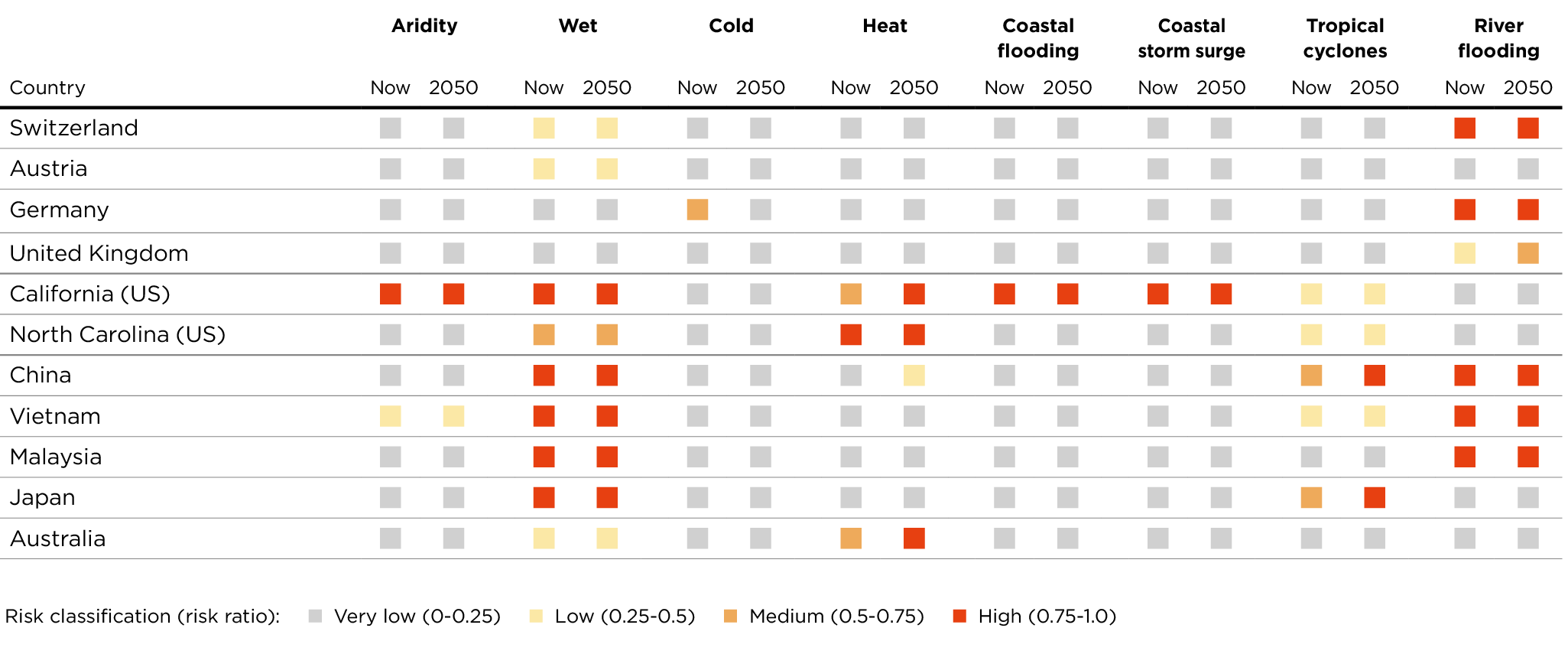
TABLE 3. PHYSICAL RISK AND RISK MITIGATION RELATED TO A HIGH EMISSIONS PATHWAY (4.4 °C, IPCC SSP5-8.5).
| Physical risks | Description of business impact | Risk mitigation |
| Aridity | Although the risk for aridity might increase in the future, it is not significantly impacting Tecan’s core business, making it a less urgent concern. Financial impact was calculated using the risk ratio of the maximum number of consecutive days when precipitation < 1 mm in a year. | Implement water conservation measures, implement water-efficient technologies within the buildings (e.g., for cooling and cleaning, etc.), and develop a drought emergency response plan. |
| Wet | This risk driver poses a significant threat to assets, but there is not a lot of projected change. Thus, the risk is likely to remain manageable in the future. Financial impact was calculated based on the risk ratio of the annual maximum precipitation on a single day. | Develop flood emergency response plan (including evacuation procedures and communication protocols), implement flood protection measures (installing flood barriers or sandbags or constructing retention basins) and relocate critical equipment to higher floors/less affected area. It is important to also consider the impact on employees, e.g., their accessibility to Tecan’s site. |
| River flooding | Although it is considered a high risk, it is expected to remain manageable in the future. Financial impact calculations were based on the global river inundation depth (flooding). | |
| Cold | Climate change is expected to have a positive impact on the asset at risk for the cold spell climate risk driver. To calculate financial impact, the risk ratio associated with annual count when at least six consecutive days of minimum temperature are below the 10th percentile. | Ensure proper insulation of the buildings and equipment to help prevent damage from the extreme cold and maintain heating systems. |
| Heat | Extreme heat is expected to increase with climate change, making it a critical concern. There are potential direct impacts on Tecan’s business (e.g., energy pricing) as well as indirect impacts (e.g., productivity loss, employee’s well-being, etc.). To calculate the financial impact, the risk ratio associated to the annual maximum value of daily maximum temperature was used. | Develop a heat emergency response plan (communication protocols, procedures for protecting employees), ensure proper ventilation and air conditioning, regular maintenance of cooling systems, backup power sources and implement heat stress management programs (training on recognizing and responding to heat-related illnesses, providing access to cool water, monitoring employees for signs of heat stress). |
| Coastal flooding and storm surge | One site is at high risk for coastal flooding and storm surge and the risk is only expected to increase with climate change. | Risk has already been resolved as operations have been relocated to other sites and this location has been shut down. |
| Tropical cyclones | The asset at risk for tropical cyclones is high and is expected to increase in Asia significantly with the impact of climate change. Financial impact was calculated based on the risk ratio associated with tropical cyclones that have a maximum sustained (1 minute) windspeed 10m above the surface. | Develop a tropical cyclones response plan (evacuation procedures, communication protocols, emergency contacts), implement protection measures (reinforcing doors and windows), regular maintenance and drainage systems, considering relocating critical things and purchase hurricane insurance. |
TRANSITION RISK ASSESSMENT
DESCRIPTION OF RISKS
The risks and opportunities associated with transitioning to a lower-carbon economy are driven by coordinated global efforts to achieve net zero emissions by 2050, aligning with the Paris Agreement goals and pursuing significant decarbonization. This entails a swift transition to renewable energy sources, electrification, and stringent regulations to curb fossil fuel extraction and usage across various sectors and economies. Carbon pricing mechanisms are regarded as crucial drivers in this endeavor. Addressing mitigation and adaptation requirements to meet Tecan’s SBTi goals may result in varied levels of financial impact, presenting both transition risks and opportunities.
Tecan has identified external factors that could lead to risks or opportunities in relation to the global transition. The financial assessment of transition risks involves comparing the Company’s maximum exposure under two distinct business paths: one where we continue with business as usual (BAU), with unabated emissions and no climate change mitigation efforts, and another where operations align with our SBTi trajectories. These business paths have been evaluated against future projections outlined by the NGFS. NGFS envisions several global economic trajectories including one where low-emission objectives are met, consistent with the Paris Agreement, and others where these objectives are not met, leading to significant global warming. In the latter, high-emission scenario, physical risks outweigh transition risks due to limited policy, technological, and legal frameworks driving change. Consequently, further analysis has focused on the low-emission scenario, where transition risks are of greater concern.
For the qualitative assessment, a long list of transition risks and opportunities that may impact Tecan’s business are provided in Table 4 and 5, respectively. In the case of the risks, possible mitigation actions are added.
TABLE 4. LONG LIST OF TRANSITION RISKS THAT MAY IMPACT TECAN'S BUSINESS AND ASSOCIATED MITIGATION ACTIONS.
| Transition risk area | Description of the risk | Likelihood | Time horizon | Mitigation actions |
| Market | Rise in raw material costs The escalating taxation on CO₂-intensive materials and the growing expenses from suppliers (due to their own transitions) lead to a substantial rise in raw material prices. | High | 2030 to 2050 | 1) Diversification of Suppliers 2) Long-Term Supply Contracts 3) Adoption of Sustainable Materials |
| Market | Increase in electricity prices A structural shift in electricity production to renewables, together with increased gas prices leads to increased electricity costs. | Medium | 2030 to 2050 | 4) Investment in Energy Efficiency 5) Investment in Renewable Energy 6) Operations Optimization 7) Diversification of Energy Procurement |
| Market | Increase in transportation costs Higher costs for operations resulting from increased regulations on fuel/energy prices in the transportation sector. | High | 2030 to 2050 | 8) Collaboration with Logistics Partners 9) Localizing the Product Portfolio |
| Market | Changing customer behavior and preferences The company must pivot its attention to sustainable solutions in response to robust client demand for low-carbon alternatives. If the transition lags behind, clients might switch to competitors, resulting in Tecan losing market share. | Medium to low | 2030 to 2050 | 10) Market Analysis and Customer 11) Lifecycle Assessments and Circular 12) Product Innovation and Development 13) Partnerships and Collaborations 14) Marketing and Branding Strategies |
| Policy and legal | Climate-related reporting and climate litigation Increasing costs (employees, consulting services, IT investments) due to additional reporting requirements and more rigorous due diligence processes. Not complying with new sustainability regulations, coupled with a worldwide transparency mandate, could result in substantial legal and reputational harm, leading to a loss of investors and customers on a global scale, along with associated financial setbacks. | High | Reporting already required | 15) Regulatory and Compliance 16) Risk Assessment and Gap Analysis 17) Engagement with Regulatory Bodies 18) Third-Party Verification and Audits |
| Policy and legal | Sustainable product regulation Emerging trends and regulations result in added expenses for the development and implementation of innovative technologies. | Medium | 2030 to 2050 | 19) Strategic Research and Development (R&D) Investment 13) Partnerships and Collaborations 20) Dedicated Sustainability Innovation Team 10) Market Analysis and Customer |
| Policy and legal | Payments for GHG emissions leading to cost increases The introduction of any greenhouse gas (GHG) emissions payment, such as a carbon tax, direct emission charge, or emissions trading scheme, can lead to higher costs in the procurement of carbon-intensive purchased goods, manufacturing, and distribution activities. | High | 2030 to 2050 | 21) GHG Emissions Assessment and Transparency 4) Investment in Energy Efficiency 5) Investment in Renewable Energy 6) Operations Optimization 22) Carbon Offsetting and Removal Programs |
| Reputation | Decrease in stock prices Should Tecan decarbonize at a slower pace than its competitors and not achieve its SBTi targets, its reputational standing may be compromised, resulting in declining stock values. | Medium | 2030 to 2050 | 4) Investment in Energy Efficiency 5) Investment in Renewable Energy 6) Operations Optimization 21) GHG Emissions Assessment and Transparency 22) Carbon Offsetting and Removal Programs |
TABLE 5. LONG LIST OF TRANSITION OPPORTUNITIES THAT MAY CONTRIBUTE TO TECAN'S BUSINESS.
| Opportunity area | Description of the opportunity |
| Market | Higher revenue from source material modification Modifying material inputs to low-carbon alternatives or making changes to existing inputs can boost revenue by avoiding high carbon taxes or reducing operational expenditures (OPEX), respectively. |
| Market | Developing low-carbon solutions An increase in demand for low-carbon solutions reinforces Tecan’s market share for those solutions that help to prevent and mitigate adverse effects of climate change. |
| Market | Supportive policies incentivize the use of electric fleet As a result of governmental decarbonization policies, economic incentives encouraging the adoption of electric fleets could lead to potential cost savings through the widespread adoption of electric mobility solutions. |
| Policy and legal /Technology | Return on investment in energy efficiency Realizing returns on investments by implementing energy-efficient measures in building retrofits, optimizing production and distribution processes for efficiency, engaging in renewable energy power purchase agreements (PPAs), and incorporating self-generated electricity sources (such as solar, wind, district heating/geothermal) at relevant factories. |
| Policy and legal | Policy incentivizes low-carbon energy Tecan makes use of low-carbon energy offerings where policies are introduced to incentivize the renewable energy sector. Tecan benefits from supportive local/regional/global incentives which can reduce operational costs. |
IMPACT QUANTIFICATION
From the long list of transition risks that may impact Tecan, an additional assessment of financial impact was conducted for: payments for GHG emissions, increase in transportation costs, rises in raw material costs, and increase in electricity prices. Payments for GHG emissions were evaluated by assessing different carbon prices on scope 1 and 2 emissions. Increase in transportation cost and rises in raw material costs were assessed indirectly by assessing different carbon prices on scope 3.1 (purchased goods) and scope 3 transport emissions to understand how potential carbon taxes may affect Tecan’s supply chain. Two Tecan business paths were modelled under the different NGFS scenarios, looking at the risks associated with carbon taxes and energy prices in 2030 and 2050 for different Paris Agreement aligned NGFS scenarios (the NGFS “Below 2°C” scenario and “Net Zero 2050” scenario). These scenarios assume that global warming is limited through stringent climate policies and innovation, thus leading to many transition risks if businesses are not adopting net zero business practices. The total transition costs, the sum and splits of carbon costs and energy costs for the two business paths, showed that Tecan achieving its SBTi commitments results in much lower transition costs compared to the BAU business path. Tecan remains committed to achieving science based emissions reductions targets, as set out in this report.
RISK MANAGEMENT
In the physical risk and transition risk scenario analyses, the descriptions of how these climate related risks and opportunities were identified has been stated. The process of identifying Climate Impact as a material topic for Tecan is described in the Sustainability Focus Areas section of this report. The Climate Impact and Circular Economy sections of this report describe some of the steps Tecan is already taking to transition to a lower carbon economy and ensure our products are future fit in a world impacted by global warming. In 2025, a number of the mitigation actions listed in Tables 3 and 5 were underway. Customer and investor interest in these topics continued to be significant in 2025, and it is clear that Tecan’s ongoing efforts are appreciated. Tecan’s global risk management process is described in the Governance section of this report and includes annual assessment of the likelihood of the climate-related physical risks and transition risks detailed in the Tables 3 and 4.
METRICS AND TARGETS
Tecan’s primary metric relating to climate risk and opportunity is the Company’s total greenhouse gas emissions, which are calculated annually in accordance with the Greenhouse Gas Protocol. In addition, Tecan tracks the percentage of purchased electricity from renewable sources and energy use at manufacturing sites. In 2025, energy audits were carried out to enable energy saving measures to be implemented and related targets to be set.
As described in this report and previous annual reports, Tecan has near- and long-term scope 1, 2 and 3 absolute greenhouse gas emissions reduction targets that have been validated by the Science Based Targets initiative. In 2026, Tecan aims to improve data quality to enable the setting of interim targets and the calculation of emissions from key emissions categories more frequently than annually.
Tecan engages with peers to share knowledge around managing climate impact, particularly through the Swiss MedTech industry Association. Engagement with suppliers includes requesting their carbon emissions reduction plan and providing advice and guidance where necessary for suppliers just beginning their carbon emissions reduction efforts; the Responsible Sourcing program carries out this work and tracks progress in this area. Employee engagement has included a detailed communications campaign when Tecan committed to the Science Based Targets initiative, with resources maintained on Tecan’s internal communications platform including an interactive game providing colleagues with the chance to develop their own path to net zero greenhouse gas emissions. In 2025, Tecan’s energy audits and milestones such as achieving an improved EcoVadis rating and certification of products with the ACT® Ecolabel provided opportunities to remind colleagues of the resources available on Tecan’s internal communications platform. When interim emissions reduction targets are set and energy reduction measures are implemented, additional communications and materials will be shared throughout Tecan.*
CIRCULAR ECONOMY
A circular economic model is one in which the creation of waste is avoided, in contrast to the linear “take-make-dispose” pattern of resource use seen more often today. Circular economy principles can be built into the design of products, as well as considered in their materials. The transition to renewable energy and materials underpins the approach. The need to transition to a circular economy is clear: every year, humanity uses more resources than the planet can regenerate, threatening the very eco-systems that enable life to flourish.
Tecan’s main business activities are the design and development of innovative instruments, instrument components and modules, software, reagents and consumables for research, diagnostics and medical use and the execution of global sales and service activities. For instruments and components, focus is on final assembly, testing and packaging. The materials sourced for this are a large contributor to Tecan’s scope 3 emissions; typical materials include steel, aluminum, plastic, small amounts of tin, and forestry products for packaging. Tecan aims to systematically identify the percentage of recycled and recyclable content in the materials we source from our suppliers. This data, in combination with the information gathered in our detailed supplier qualification process, will enable Tecan to make informed decisions about the impact of materials purchased and to work towards optimizing the positive impact of the products we offer.
Many of Tecan’s products are long-lasting, designed to be used for many years and this long product lifespan is supported by Tecan’s service offerings. Nonetheless, there are opportunities to reduce Tecan’s use of resources, including through ecodesign.
TECAN CONSUMBLES
Tecan offers a broad portfolio of products including disposable pipette tips. Tecan is one of the few suppliers that allows customers, depending on the application, to decide whether to use steel needles for pipetting steps. To do so, Tecan provides two completely different technologies for liquid transfers. For applications where the risk of cross-contamination is only minimal or non-existent, it can make sense to use steel needles for reasons of sustainability, and some major customers choose to do this.
Tecan’s products are widely used in regulated laboratories and markets, which restricts what changes can be made to product content and how these changes are implemented. These restrictions often also apply to the packaging that comes into contact with the product. There are also restrictions regarding product disposal, for example, plastics that have come into contact with certain medical samples are incinerated rather than recycled.
Many of Tecan’s consumables products are categorized as single-use products by regulation, since they come into contact with samples that may need to be treated as hazardous waste. As a result, consumables are estimated to be Tecan’s largest source of plastic waste. An information sheet advising customers on how best to recycle Tecan consumables is available on tecan.com. In 2025, Tecan began offering a consumables waste takeback program to customers in the US. Working with a third-party recycling services provider, Tecan provides collection bins and mail back envelopes to customers wishing to recycle non-hazardous waste, which is then recycled into new laboratory products.
In 2025, Tecan’s central Consumables team concentrated its sustainability initiatives on four key areas. First, they advanced the development and implementation of a new tray type, started in 2024, which uses approximately 40% less plastic than its predecessor. This initiative is central to the team’s efforts to reduce the environmental footprint of the consumables portfolio. To further minimize environmental impact, the team increased production at a new facility in the United States, bringing manufacturing closer to customers. This regionalization not only shortens transport distances and reduces emissions, but also strengthens supply chain resilience and agility, supporting both sustainability and business continuity. Throughout the year, the team also focused on developing and implementing new packaging strategies to further improve the environmental impact of consumables products. Finally, 2025 marked a significant milestone with the ACT® Ecolabel certification of selected MCA384 and LiHa (liquid handling) disposable tip products. This third-party sustainability label provides customers with transparent, credible data on the environmental impact of our products and underscores the team’s commitment to meeting global sustainability standards.
TECAN ECODESIGN
Ecodesign provides Tecan with further opportunities to reduce its environmental impact. Tecan’s Fluent™ Automation Workstation incorporates a number of ecodesign features, including stand-by mode, which saves power when the system is not in use but allows it to be activated immediately, and "Zero-G", which reduces power to the motors when the system is on pause or within a run whenever an arm is not in use. The Fluent™ is an unusually quiet workstation, reflecting its efficient design: the field-oriented control protocol increases the efficiency of the motors by up to 80%. Waste segregation features allow for the separation and so optimal disposal of contaminated waste (plates and tips) versus clean waste (tip wafers and boxes), and efficient fixed tip washing protocols help to minimize the use of disposable tips.
Considering energy efficiency, materials, waste, and the opportunity to have a positive environmental impact is part of Tecan’s structured research and development process, with a dedicated section of Tecan’s milestones R&D review process focused on alignment with Tecan’s sustainability strategy. Ecodesign includes considering how readily a product can be serviced and refurbished, extending out its in-use lifespan, as well as how it might be dismantled and repurposed at end of life. Refurbishing used products brings the additional business advantage of increasing Tecan’s understanding of how our products are used and how designs might be refined to deliver performance improvements for our customers. In 2025, steps were taken to integrate ecodesign more fully into R&D’s design review checklist, as well as to increase product managers’ understanding of the importance of including ecodesign in input requirements. Through current and future activities, Tecan works to support UN SDG 12.2, “move towards a circular business model.”
POSITIVE SOCIAL AND ENVIRONMENTAL IMPACT THROUGH EXPANDING PRODUCT LIFESPAN
In 2025, enterprising colleagues in North Carolina launched the Te-Cycle Pilot, a Tecan initiative designed to extend the useful life of laboratory equipment by repurposing trade-in instruments for donation to educational organizations. The program’s first partnership was with Gloucester Biotechnology Academy in Massachusetts, a hands-on training center preparing students for careers in biotechnology and life sciences.
Through Te-Cycle, Tecan established clear standards for trade-in equipment, prioritized salvaging usable parts, and tested all donations before delivery to ensure smooth installation. Close collaboration with the Academy ensured the right equipment to match their needs. Installation took place during the academic semester, allowing Tecan staff to interact with students and provide insights into robotic liquid handling technology. By redirecting both equipment and consumables, Te-Cycle not only supports education and sustainability but also helps Tecan build long-term relationships with future scientists and the broader biotech community.
*References
TCFD (2017), Recommendations of the Task Force on Climate-related Financial Disclosures, June 2017.
TCFD (2021), Implementing the Recommendations of the Task Force on Climate-related Financial Disclosures, October 2021.
NGFS (2023), Network for Greening the Financial System Phase IV Scenarios, November 2023.
IPCC (2021), Climate Change 2021: The Physical Science Basis. Contribution of Working Group I to the Sixth Assessment Report of the Intergovernmental Panel on Climate Change, 2021.